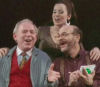
Anything For a Laugh | “Once Upon a Mattress” @ CTG/Ahmanson

Once Upon a Mattress (CTG/Ahmanson)Two words: Sutton Foster

Sutton Foster is a comic gem and an outstanding theatre artists, and her energy, enthusiasm, and playfulness make this production of Once Upon a Mattress spectacular, and something you must go see (if you like comedy) before it closes shop next week. Go, buy your tickets, I’ll wait.

(taps feet)

Got them? Great.

Now to explain. Last night, we saw Sutton Foster in the aforementioned Once Upon a Mattress at the Ahmanson. For those unfamiliar with the show, Mattress is a lightweight musical from the late 1950s with music by Mary Rodgers and lyrics by Marshall Barer, with a book by Jay Thompson, Dean Fuller, and Marshall Barer. It basically is a retelling of Andersen’s “The Princess and the Pea”. Nothing deep here.

The original production was notable for who it launched into the world: Carol Burnett. Burnett was the lead, and her comic chops made the show. She mugged, she played, she sang, and she demonstrated the wide array of talents she possessed. Back in 1996 a revival was attempted with Sarah Jessica Parker in the lead, but Parker is not the comic that Burnett is, and it didn’t do quite a well.  I’ll note that I last saw Mattress back in 2012 at Cabrillo Music Theatre with local talent Bets Malone, who was great in the role.

A year or two ago, someone had the bright idea to cast Sutton Foster as Princess Winnifred for an Encores production. I think this was between her time in The Music Man (where she got entangled with her current paramour, Wolverine) and her time in Sweeney Todd. Foster is well known on the Broadway stage for her dancing and comic timing (demonstrated many years ago in Thoroughly Modern Millie). But comic timing is not the same as being a comic. Here, she is a comic.

Sutton Foster is clearly having fun with the role, and milking every moment for comic potential. About halfway into the first act, there’s a scene where she’s eating some grapes. She stretches it. She plays with it. Without saying a word, she makes it incredibly funny. At other points, she has staring contests with other actors, just to see if they can remain in character. She flops, she falls. She is clearly having the greatest amount of fun with this role, and when an actor enjoys their role, it is projected to the audience. I wrote about that last week when talking about Olivia Valli as Elphaba in Wicked. When an actor loves a role and the role loves them back, it shows and the magic happens.

Watch Foster closely. Her face. Her movements. Her reactions. Bring binoculars. It’s priceless.

And the thing is: It’s not just Foster having fun. Her partner in crime, Michael Urie, has equal fun as Prince Dauntless. Just watch him attempt to work the steps. Watch his reaction and faces. Watch his comic falls. He’s having equal fun. Then there is Daniel Breaker as the Jester. From the moment he starts the show, he is playing with the audience. He’s clearly in on the joke, and he wants you to realize this isn’t your serious show: this is fun.

It goes on that way throughout the cast: Ana Gasteyer creates an over the top shrew of a Queen, but with her own jokes as well. Kevin Del Aguila as the Wizard has fun with the role and the flash paper. David Patrick Kelly makes the most of the King’s pantomime (in the original production, they had cast an actor that couldn’t sing, and so they made the King’s role silent) — and he was played by the great Jack Gilford).  Even the second story pair: Ben Davis as Sir Harry and Oyoyo Joi as Lady Larkin know how to play for the laughs.

This is a funny funny show. You want serious? Go up the street and see Wicked. Find a production of A Christmas Carol. This production will send you into the new year smiling.

Tickets are available through the Center Theatre Group website page on the show here. It closes on Jan 5. So get your tickets now.

———

Once Upon a Mattress. Book by Jay ThompsonMarshall Barer, and Dean Fuller. Music by Mary Rodgers. Lyrics by Marshall Barer. Adapted by Amy Sherman-Palladino. Directed by Lear deBessonet. Choreographed by Lorin Latarro.

Cast: Sutton Foster Princess Winnifred; Michael Urie Prince Dauntless; Ana Gasteyer Queen Aggravain; Kevin Del Aguila Wizard; Daniel Breaker Jester; Ben Davis Sir Harry; Oyoyo Joi Lady Larkin; David Patrick Kelly King Sextimus the Silent; Daniel Beeman Ensemble; Wendi Bergamini Lady Rowena, Nightingale of Samarkand, Ensemble, Asst. Dance Captain; Taylor Marie Daniel Princess #10, Ensemble; Cicily Daniels Ensemble; Amanda Lamotte Prologue Puppeteer, Princess #12, Ensemble; Michael Olaribigme Ensemble; Destinee Rea Princess #11, Ensemble; Adam Roberts Ensemble; Jeffrey Schecter Ensemble; Matt Wall Ensemble; Daniel Wright Ensemble; Richard Riaz Yoder “Very Soft Shoes” Dance Soloist, Ensemble. Swings: Sheldon Henry, Sarah Michele Lindsey Dance Captain, Matthew Steffens.

Music Department: Bruce Coughlin Orchestrator; Mary-Mitchell Campbell Music Supervisor; Annbritt duChateau Music Director, Conductor; Chris Kong Assoc. Conductor, Keyboard 1; Brad Gradner Keyboard 2; Sal Lozano Reed 1; Glen Berger Reed 2; John Mitchell Reed 3; Dan Fornero Trumpet 1; James Ford Trumpet 2; Wendell Kelly Trombone; Jen Choi Fischer Violin 1; Grace Oh Violin 2; Adrianne Pope Violin 3; Bryan Gonzalez Viola; David Mergan Cello 1; Ira Glansbeek Cello 2; Will Johnson Bass; Robert Payne Contractor; Kimberlee Wertz Music Coordinator; Randy Cohen Keyboard/Synthesizer Programmer; Josh Clayton and Adam Beskind Music Copying.

Production and Creative: David Zinn Scenic Design; Andrea Hood Costume Design; Justin Townsend Lighting Design; Kai Harada Sound Design; J. Jared Janas Hair, Wig, Makeup Design; Skylar Fox Physical Comedy & Effects; Martavius Parrish Assoc. Director; Juniper Street Productions Production Management; The Telsey Office Casting; Cody Renard Richard Production Stage Manager; Jhanaë K-C Bonnick Stage Manager; Angela M. Griggs Asst Stage Manager; Megan Curren General Manager; Dylan Glen Assoc General Manager; Brian Decaluwe Company Manager; Ray Metmore/JR Goodman Production Props Supervisor.

Favorite Minor Credit: Sutton Foster Custom Crochet Crowns

♦ ♦ ♦

Administrivia: I am not a professional critic. I’m a cybersecurity professional, a roadgeek who does a highway site and a podcast about California Highways, and someone who loves live performance. I buy all my own tickets, unless explicitly noted otherwise. I do these writeups to share my thoughts on shows with my friends and the community. I encourage you to go to your local theatres and support them (ideally, by purchasing full price tickets, if you can afford to do so). We currently subscribe or have memberships at: Center Theatre Group/Ahmanson TheatreBroadway in Hollywood/Pantages TheatrePasadena Playhouse; and 5-Star Theatricals. We’re looking for the right intimate theatre to subscribe at — it hasn’t been the same since Rep East died (it’s now The Main, and although it does a lot of theatre, it doesn’t have seasons or a resident company), and post-COVID, most 99-seaters aren’t back to doing seasons (or seasons we like). I used to do more detailed writeups; here’s my current approach.

Upcoming ♦ Theatre / ♣ Music / ◊ Other Live Performance – Next 90ish Days (⊕ indicates ticketing is pending). We’re a bit light on theatre while my wife is recuperating from her knee replacement.

Share

It’s The Differences That Make Us Standout | “Wicked (Part 1)” – The Movie

Wicked (Part 1) - The MovieWhen one sees a movie on the musical stage, one has to ask “Why?”. Usually, there’s no good answer, and such properties fade deservedly into posterity. Fifteen years from now, will anyone still be doing The Bodyguard or Pretty Woman?

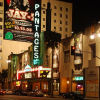
When one sees a stage musical on the screen, one has to ask: “Why?” Was it just to preserve the story and execution for posterity? That could be done by just a filming of the stage production. There needs to be something more: something added. There needs to be something that the additional focus and time the camera can provide will bring. Something that the cinematographer and special effects can bring, that one doesn’t get from the stage.

Last Saturday, I saw Wicked: The Musical on the stage at the Pantages. Today, I saw just Act I of the stage musical on the big screen as Wicked (Part 1), since retitled Wicked as someone had the bright idea to retitle Wicked (Part 2) to Wicked: For Good. Part 2 comes out next November. I do wonder if people will remember the details from Act I (uh, excuse me, Part 1) when they see Act 2.

So, in elongating Act 1 to become a full 2hr 40min movie, what was added or changed other than significantly more dancers and a significantly larger orchestra:

  • Musical numbers were stretched and had more dialogue interspersed
  • Dance numbers were much more elaborate
  • There was more exposition, and slightly more backstory
  • There was more scenic locations and more scenery.
  • There was more closeups of the characters.

That last point is the interesting one. I don’t mean much more backstory on the characters. I mean literal close ups. You were much more up close and personal with both Glinda and Elphaba, and this simple cinematographic trick made you closer to the people. This simple change adjusted the focus, so to speak, of the story. Whereas the stage musical comes across (at least to me) much more about the story of the Animals and the discrimination against them, the movie comes across much more as the story of Elphaba: her relationship with Glinda, their growth as people, their growth as friends. All the foreshadowing of who would become what in The Wizard of Oz is minimal: you see the lion; you see Fiyero portrayed as brainless, you see Boq behaving heartlessly. There’s a reference to Toto being there, but I didn’t see him.

Even more than on stage, this was Elphaba’s story, and her growth from someone who was scared of who she was and tired of being different into someone who was confident in herself and who was proud of her differences. Mind you: This is with essentially the same story, and very little additional dialogue. It was how the camera served to change the focus.

I did love the little hidden things. The use of the 1900 Baum book as a history book. The references of Omaha and the carnival. The cameos during Wizamania, and the rivalry.  The expansive use of poppies (and it wasn’t until now that I made the opium connection, especially in the classroom scene).  When the Wizard plaster relief at Shiz broke, it revealed the Animal teaching origins (and they did a much better job with the Animals than the stage production ever could).

But they also made some mistakes. They made the same mistake the 1939 movie made, but that the stage musical, the Baum book, the Maguire books and even The Wiz got right: the Emerald City being green was part of the humbug: There were mandatory green glasses required. Nary  a green glass anywhere in the EC.

The performances were very strong. At least based on the sample of the two movies I have seen this year, Timothée Chalamet deserves an Oscar for A Complete Unknown, and Cynthia Erivo deserves one for Wicked. The supporting cast was strong as well. Michelle Yeoh does evil so well, and was one of the best and most menacing Madame Morrible’s I’ve seen. Jonathan Bailey was a strong Fiyero, and Ethan Slater (who I’ll always think of as Spongebob Squarepants) brought the right childish quality to Boq.  I applaud the producers for casting Marissa Bode as Nessarose, as she is actually in a chair. How they are going to handle that in Act 2, excuse me, Part 2, excuse me, Wicked: For Good, I don’t know (for those unfamiliar with the musical (c’mon, you don’t need spoiler alerts), Elphaba at one point enchants Nessarose’s silver slippers so she can walk). I also applaud the producers and the Telsey office for the diverse casting of the dance ensemble.

That last point brings up something which, regrettably, must be mentioned.  As I noted in my writeup of the musical, “there are those on the right who are claiming that the movie is “woke” and propaganda. A petition from Million Moms states: ““Of course, the musical contains a tremendous amount of witchcraft and sorcery, and that content prompts most parents to avoid taking their children to see Wicked. But the film also shows not-so-discrete crossdressing and men crushing on men, which parents may not expect. Instead of an uplifting Broadway musical about friendship and family, talents and resources were used to create a dark movie that also pushes wokeness.” Kristen Chenowith, the original Glinda, has spoken out against this statement. But even more: Wicked has always been political. It has always been “woke”. It was never a musical primarily about friendship and family: it was a musical about the importance of speaking out for those with no voice. It is a musical that makes the point that those whom our leaders purport to be “wicked” may really just be those who are speaking out to power, who are speaking up for truth and justice. Wicked has always been this way, from the original book, to the original musical.”

So, was Wicked “woke”. If it was in the sense that the Hundred Moms speak of, it was subtle. Sure, there was magic in the movie—but there was magic in the original 1900 book, and magic in the 1939 movie, and the latter was definitely not a children’s movie (they didn’t have such movies in 1939). Was there cross dressing? This is a fantasy land: there is absolutely no reason that dressing conventions from the 2000s should show up in a movie in an undated fantasy land. Were there possibly some same sex relationships in the background? Probably, but they weren’t the main story. In short, Hundred Moms: Get a life. If you don’t like movies like this, don’t go to them. Go see Paddington in Peru.

Next: We have the people that have only seen the movie, and although they may have heard of the stage musical, they’ve never seen it. They write reviews about how this is a bloated movie. Duh. You have a 2hr 45min musical, with a 15 minute intermission, expanded so that Act 1 is now longer than the original whole two-act stage production. What did you expect? You want snappy, go see the Wicked Musical. It is on tour. Here are the dates for the North American Tour; it as at the Pantages until Feb 3.

Was this worth seeing? Yes, as it gives a different take and understanding on the stage show.

What’s next? Well, while you’re waiting for Part 2, excluse me, “For Good”, go and read the Greg Maguire books and learn the real political commentary in the story. Go read the original Baum books. Go see the musical on tour.

Will this be a classic, like the 1939 movie? Time will tell. There have been lots of productions of this story, and that’s because there’s a timeless meaning in a good fable. As long as that heart is there, the story of Oz will live forever.

Share

Because I Have Known You, … | “A Complete Unknown”

A Complete Unknown (Movie)What, you were expecting Wicked?

Nah, Bob Dylan has been a much more pervasive influence in my life, from my brother playing Peter, Paul, and Mary on his guitar, to my uncle playing folk music. In fact, if you look at my music collection, you’ll two primary genres: folk music, of all varieties, and cast albums.

True, we were deeply disappointed in the Bob Dylan musical, Girl From The North Country, but we shall not speak of that anymore. This was not Girl From The North Country.  That was a depressing mess. This was a wonderful motion picture.

And because it was a motion picture, I don’t have the burden of detailing everything about the story or the cast. I can just point you to IMDB, and give you my impressions.

First: The story. This is the period of Dylan with which I am most familiar. Not only from the Dylan-lore, but from the stories told by his contemporaries whom I still listen to and see: Noel Paul Stookey, Tom Paxton, and others. The movie captures the Greenwich Village folk scene, and most of the people I expected to see, and name drops most of them. I knew who Albert Grossman was before he even showed up. I knew the names and the music: Pete Seeger, Leadbelly, Odetta, and others. The movie had that authentic feel, and the characterizations seemed spot on. Of PP&M, they really only emphasized Peter Yarrow’s role (and, alas, Yarrow is on his last days right now, dealing with bladder cancer); you had two glimpses of Mary and I think only one of Noel Paul.

I knew some of Dylan’s story from that time, but not all of it. I know that the Suzie character is a composite, but I didn’t know about his relationship with Joan Baez. I was disappointed that some of the folks I expected to see weren’t mentioned (or at least name-dropped), but perhaps they were coming in as he was moving out of the folk world (I’m thinking in particular of folks like Tom Paxton or Mississippi John Hurt). Other folks we might have heard from were more on the traditional folk side or slightly before Dylan’s time (the Weavers and the Limeliters would be good examples there). I originally had Dave Von Ronk on the list, but it turns out the character was in the movie.  I didn’t recognize Norbert Leo Butz as Alan Lomax (and both Noel Paul and Mary’s performers were uncredited, and only Noel Paul’s made it to IMDB).

But the story held my attention and was interesting.

The performances were spot on. Timothée Chalamet was remarkable. I saw him on Colbert, and he mentioned he had been working on this role for five years, and all the music was live-sung. I’m super impressed with him, first with his great job on Wonka, and now this. He is an extremely talented young man, a very strong musician, and he captured Dylan’s voice and mannerisms well. Ed Norton was also extremely strong as Pete Seeger, and he captured the character as I knew him well. Nick Pupo looked like the young Peter Yarrow, but didn’t quite have the same voice. Monica Barbaro was a strong Joan Baez; again, she nailed the voice. Boyd Holbrook was a bit of a caricature of Johnny Cash: he had the voice, but not the depth. But that wasn’t critical to the movie.

Should you go see this: If you like folk music, yes. I was thinking about this in relationship to other early folk stories: 2003’s A Mighty Wind and 2013’s Inside Llewyn Davis. The latter two are fictionalized, but do a good job of presenting the folk scene. This comes closer to presenting it as it was. I think, of the three, this might be the best.

Share

Green Girls and Politics | “Wicked” @ BIH/Pantages

Wicked (Pantages/BIH 2024)It’s sad, somewhat, that I must start out with clarifying that I’m writing about the original live musical on stage, not the movie. We haven’t seen the movie yet. Perhaps Christmas Day.  But I’m leaning towards the Bob Dylan movie. I do wonder what those who have only seen the movie—never read the book, never seen the musical—would make of the stage musical. How would they feel with the direction into which the second act descends? For Wicked, my friends, is not a light and fluffy musical. Like other musicals with staying power, it has much deeper messages. You want light and fluffy. Go see Legally Blonde-The Musical. You can find your pink girl power there.

As you might have guessed, last night we saw Wicked at the Pantages. We rarely see the same production multiple times (and I consider a tour instances to be the same production as other tour instances, as they are the same producing and designing team). We’ve seen Hamilton three times. But normally, there needs to be something novel to make a show worth seeing again. A regional or small theatre mounting (such as 5-Star doing Frozen). An interesting twist in the execution (such as the Deaf West American Idiot). But, for example, Annie (which is also coming to the Pantages)—I have no urge to see it again.

This brings us to Wicked. We saw the tour when it first came to the Pantages in 2005. I think 20 years is a sufficient waiting period, and yes, the show has been on tour that long. No regional productions. No local productions. So it was time. My green friend, you’ve held up well.

Back when I first saw it, I didn’t write a detailed review. I was just getting started with my writeups. Since then, I’ve been doing more analysis. I’ve also read the books — multiple times. But I had forgotten the depth of the show. It’s popularity, of course, comes from the music and the implied girl power and friendship between the two principals: Elphaba and Galinda. There are those who see themselves as the outcast, never accepted, Elphaba. There are those who see themselves in the princess, Galinda. There are those who ache for those two sides to come together.

But watching the show last night, what struck me more was how political the show was, and how increasingly relevant the political heart of Greg Maguire’s book that remained in the show is. For Wicked, at its heart, is an intensely political show. It was written in the heart of the Bush administration, with commentaries on Bush’s treatment of political prisoners and the views against minorities. But in our new political era, it is even more timely. Here we have a story about a talented flim-flam man, who knows how to manipulate public opinion and spread falsehoods for his own power and gain. Here we have a society that has made a literal scapegoat of the Animals (following the book’s convention, Animals are the creatures that have the power of speech, whereas animals do not). They blame the Animals for their economic problems (remember the reference to the Great Drought), and then serve to exclude them and push them from society. Deport them, as you might characterize it. We see those who look different and act different being ostracized, and accepted only for what they can give to those in power. We have celebrities harnessed to spread the message of the flim-flam man, spreading lies and stories they know not to be true. But this has no resemblance to what we have seen in 2024-2025, does it.

And our heroine? She is someone who is rejected who uses her power to speak out for those that literally have lost the voice they used to have. She is able to sway others to her position and eventually sweeps the administration of the political flim-flam man away. He leaves the country, with the people unaware of the extent of his crimes, and his cronies end up in prison.

We need an Elphaba today to start the fight. We need a Glinda, post-Elphaba, to arise and push out the flim-flam man. Perhaps in 2026.

The best musicals reflect their times, and are often not well received when they first come out, although sometimes they are popular. Chicago was a failure when it first came out. But after OJ and the rise of the celebrity trial where we realized it was all showbiz, it was a hit. It has been going strong since then, with a steady stream of Roxies keeping the show going. Wicked was poorly received the season it debuts. Avenue Q was the big hit of that season. But although Avenue Q is still being produced regionally, Wicked remains open on Broadway and on tour. It resonated with audiences. They saw the girl power and the humor, and perhaps they absorbed the political message.

In response to the movie, there are those on the right who are claiming that the movie is “woke” and propaganda. A petition from Million Moms states: ““Of course, the musical contains a tremendous amount of witchcraft and sorcery, and that content prompts most parents to avoid taking their children to see Wicked. But the film also shows not-so-discrete crossdressing and men crushing on men, which parents may not expect. Instead of an uplifting Broadway musical about friendship and family, talents and resources were used to create a dark movie that also pushes wokeness.” Kristen Chenowith, the original Glinda, has spoken out against this statement. But even more: Wicked has always been political. It has always been “woke”. It was never a musical primarily about friendship and family: it was a musical about the importance of speaking out for those with no voice. It is a musical that makes the point that those whom our leaders purport to be “wicked” may really just be those who are speaking out to power, who are speaking up for truth and justice. Wicked has always been this way, from the original book, to the original musical.

[And, I guess I should note: Those on the other side of the political spectrum may also see their views in this. Sigh. But they are wrong.]

A musical that has been running this long has created a large family of Ephabas and Glindas. One might think a 20 year old tour might be tired, and the performances would be weaker. That clearly seemed to be the position of Charles McNulty of the LA Times, who bemoaned the fact that the tour cast wasn’t near Chenowith and Menzel. I disagree. I don’t think there was a weak performer in the entire tour cast. At worst, some were merely very good.

At our performance, we had some substitutions. The primary tour Ephaba, Lauren Samuels, was out for some reason. We didn’t have one of the other understudies or standbys; instead, the producers brought in a former Elphaba for the role: Olivia Valli. She was out when we saw the Pretty Woman tour, alas. She was outstanding, bringing a wonderful personality to the role. I was just fixated in watching her face. During the curtain call, she broadcast such happiness with being able to perform the role again. It was clear she was broadcasting that happiness during her performance. Had McNulty seen her, perhaps his opinion would have been different.

Our Glinda, Austen Danielle Bohmer, fell into the very good category. She was good in the role, but was more a Laura Bell Bundy as Elle than Kristen Chenowith. She lacked the little extra spark that the role needs. But it wasn’t a bad performance, but when up against Valli’s Ephie, she just couldn’t hold her own.

The other substitution we had was David Kaverman as the Wizard. He was good, but came off as a little too young, with not quite the paternalistic charm required. Was he even old enough to be Elphaba’s father?

Other cast members were very strong, including Kingsley Legg’s Dr. Dillamond, Erica Ito’s Nessarose, and Xavier McKinnon’s Fiyero. The production quality was very high; something my daughter commented upon. The orchestra was also very strong. One might think, after 20 years, the production values would get tired and worn, but the company seems to be doing an excellent job of keeping the quality and production high. This wasn’t a schlocky tour that was dependent on projection.

That leads to another side note: Some shows you know will fade into the history books because of their production demands. Few regional theatres will be able to do Back to the Future: The Musical because they can’t handle the productions and the Delorian. Similarly, could a regional theatre or an intimate theatre or school do Mrs Doubtfire because the the needs of the latex mask? Looking at Wicked from that point of view: It’s doable. Sure you need a flying rig, but that’s known technology from Peter Pan. You don’t need the dragon at the top of the stage, and pretty much everything else is achievable. I think there is the potential, when the tour eventually ends as it must, for Wicked to be a hit on the regional and smaller circuits. I’ll note that will be harder for Hamilton, as some creative thought will be required to rework the staging for venues without double turntables.

Attempting to wrap this up: With the movie now in theatres, should you shell out the bucks to see Wicked on stage. I think so. First, folks rarely sing back at a stage musical (and the ushers will slap them down if they do). At the movie, folks sing back to the screen (one reason I’m hesitant to see the movie). Second, you get to see the whole story. You don’t have to see Act I, and then wait a year for Act II. The musical condenses the story, and in doing so provides a tighter focus on the story. The performances on the tour are strong, and unless you have seen it on stage recently (I think it was out in LA just pre-pandemic), it is worth seeing again. Of course, if you have never seen it, you must see the stage version BEFORE the movie, so you get the whole story. I also strongly recommended reading the Greg Maguire books (and there are four, now five, in the series: Wicked, Son of a Witch, A Lion Among Men, and Out of Oz. The latest in the series, Elphie, just came out. I haven’t read it yet.

Wicked continues at the Pantages through February 3.  You can buy tickets through the Pantages web page.

———

Wicked. Music and lyrics by Stephen Schwartz. Book by Winnie Holzman. Based on the novel by Gregory Maguire. Directed by Joe Mantello. Musical Staging by Wayne Cilento.

Cast (Add/Delete indicates changes at our performance). Lauren Samuels Olivia Valli Elphaba; Austen Danielle Bohmer Galinda/Glinda; Aymee Garcia Madame Morrible; Blake Hammond David Kaverman The Wonderful Wizard of Oz; Erica Ito Nessarose; Kingsley Leggs Doctor Dillamond; Xavier McKinnon Fiyero; Alex Vinh Boq; Jennifer Mariela Bermeo Ensemble; Anthony Lee Bryant Ensemble; Sean Burns Ensemble; Matt Densky Ensemble; Kelley Dorney Midwife, Ensemble; Kayla Goldsberry Witch’s Mother, Ensemble; Rose Iannaccone Ensemble; Mattie Tucker Joyner Ensemble; Lauren Leach Ensemble; Colin LeMoine Ensemble; Tiffany Rae Mallari Ensemble; Adelina Mitchell Ensemble; Brayden Newby Ensemble; Allsun O’Malley Ensemble; Madison Clair Parks Ensemble; Kat Rodriguez Ensemble; Derek Schiesel Ensemble; Wayne Schroder Witch’s Father, Ozian Official; DJ Smart Chistery; Brett Stoelker Ensemble; Ben Susak Ensemble; Justin Wirick Ensemble. Swings (⇑ indicates swung in): ⇑ Anthony Lee Bryant;  ⇑ Mattie Tucker Joyner; ⇑ David Kaverman; Kelly LaFarga Dance Captain; Marina Lazzaretto; ⇑ Ben Susak Dance Captain. Understudies: Anthony Lee Bryant u/s Chistery; Sean Burns u/s Boq; Matt Densky u/s Boq; Kelley Dorney u/s Madame Morrible; Mattie Tucker Joyner u/s Nessarose; ⇑ David Kaverman u/s Witch’s Father, Ozian Official, The Wizard, Dr. Dillamond; Colin LeMoine u/s Fiyero; Adelina Mitchell u/s Elphaba; Allsun O’Malley u/s Glinda, Nessarose; Madison Claire Parks u/s Glinda; Kat Rodriguez u/s Madame Morrible; Wayne Schroder u/s The Wizard, Dr. Dillamond; Brett Stoelker u/s Fiyero; Ben Susak u/s Chistery.  Standbys: Carly Augenstein Elphaba Standby . Chelsea Emma Franko Elphaba Standby.

Music Department (Ł indicates local): William David Brohn Orchestrations Stephen Oremus Music Supervisor; Alex Lacamoire & Stephen Oremus Music Arrangements; Michael Keller Music Coordinator; Faith Seetoo Music Director, Conductor; Derek Shorter Associate Conductor, Keyboard 2; Luke Flood Keyboard 1; Amy TatumŁ Piccolo / Flute / Alto Flute / Recorder / Penny Whistle; Michelle ForrestŁ Oboe / English Horn; Katie FaraudoŁ French Horn; Jeff DriskillŁ Soprano Sax/E♭ Clarinet/B♭ Clarinet / Bass Clarinet; Aaron SmithŁ  Trumpet / Flugelhorn; Nick DaleyŁ  Tenor/Bass Trombone; Michael ValerioŁ Bass (Acoustic / 5-String Electric / Fretless); Michael AbrahamŁ Guitar (Electric / Nylon String / Steel String / 12-String / Banjo / Mandolin); Chris JagoŁ  Drums; Bruce CarverŁ Percussion; Alby PottsŁ Keyboard 3; Adam McDonaldŁ Keyboard 4; Mary EklerŁ Keyboard Sub; Eric HeinleyŁ  Orchestra Contractor.

Production and Creatives: Eugene Lee Set Design; Susan Hilferty Costume Designer; Kenneth Posner Lighting Design; Tony Meola Sound Design; Elaine J. McCarthy Projection Design; Tom Watson Hair and Wig Design; Joe Dulude II Makeup Designer; Jake Bell Technical Supervisor; James Lynn Abbott Dance Arrangements; The Telsey Office Casting; Lisa Leguillou Assoc. Director; Corinne McFadden Herrera Associate Choreographer; Edward Pierce Assoc. Scenic Designer; Chic Silber Special Effects; Dawn Fenton Production Stage Manager; Michelle Dunn Stage Manager; Colleen Danaher Asst. Stage Manager; Joseph Heaton Asst. Stage Manager; 321 Theatrical Management General Management.

Favorite minor credits: Sascha Kaminski Spellbooks; Bob Flanagan Puppets; Michael Durry Design Inc Flatheads and Monkey Wings; although a close second was Bra* Tenders Undergarments and hosiery

♦ ♦ ♦

Administrivia: I am not a professional critic. I’m a cybersecurity professional, a roadgeek who does a highway site and a podcast about California Highways, and someone who loves live performance. I buy all my own tickets, unless explicitly noted otherwise. I do these writeups to share my thoughts on shows with my friends and the community. I encourage you to go to your local theatres and support them (ideally, by purchasing full price tickets, if you can afford to do so). We currently subscribe or have memberships at: Center Theatre Group/Ahmanson TheatreBroadway in Hollywood/Pantages TheatrePasadena Playhouse; and 5-Star Theatricals. We’re looking for the right intimate theatre to subscribe at — it hasn’t been the same since Rep East died (it’s now The Main, and although it does a lot of theatre, it doesn’t have seasons or a resident company), and post-COVID, most 99-seaters aren’t back to doing seasons (or seasons we like). I used to do more detailed writeups; here’s my current approach.

Upcoming ♦ Theatre / ♣ Music / ◊ Other Live Performance – Next 90ish Days (⊕ indicates ticketing is pending). We’re a bit light on theatre while my wife is recuperating from her knee replacement.

  • December: ♦ Once Upon a Mattress at CTG/Ahmanson;
  • January: ♦ Anything Goes (Concert) at Pasadena Playhouse (Pasadena Civic);
  • February: ♦ Sondheim’s Old Friends at CTG/Ahmanson;  ♦ Harry Potter and the Cursed Child at BIH/Pantages; ♦ Desperate Measures at ICT Long Beach
  • March: ♦ Top Dog/Underdog at Pasadena Playhouse; ♣ Nefesh Mountain at McCabes; ♦ Fake It Until You Make It at CTG/Taper; ♦Drat the Cat at Group Rep; MoTAS/MoTBH Mens Seder @ TAS
Share

Finding Your Pride | “La Cage Aux Folles” @ Pasadena Playhouse

La Cage Aux Folles (Pasadena Playhouse)Sometimes, I’m not sure what other reviewers are smoking. Last night, while attending La Cage Aux Folles at the Pasadena Playhouse, I attempted to figure out when I last saw the show on stage. I searched for a writeup of the show on my site, and came up empty (and I started writing up shows on Livejournal around 2004). I did find this other reviewer’s writeup of the PP version of the show, and he thought it was an ill-conceived take on the show — and this is a reviewer that seems to love everything. I did discover that the revival of La Cage toured in 2012 (and I seemingly skipped out on attending that), and the original was in LA through the LA Civic Light Opera in 1984. This could actually mean that the last time I saw this show on stage was way back in 1984. Forty years. Wow!

Reading through this other review, the reviewer’s opinion is that this production was essentially overdone, overacted, and ill-conceived. This reviewer didn’t like the interpretation, which is completely their prerogative. I disagree, and hopefully in this writeup I can explain why.

Hopefully, you’re someone familiar with La Cage Aux Folles. Perhaps you read the original story. Perhaps you saw the original film. Perhaps you saw the American remake (“The Birdcage”). Perhaps you’ve even seen the musical, which is based on the original story, not the movie. The basic plot is as follows — and it is essentially a sitcom. You know that because you can end it with “Hijinks ensue”

Two gay men operate a nightclub in the south of France: one is the star drag performer (Albin/Zaza), and the other serves as the non-drag emcee (Georges). Albin is a bit of a Diva, and a bit of a force of nature; Georges is the more sedate of the two. Their son comes home and tells them he’s found the girl he wants to marry. Her family is coming to dinner. However, her father is a right-wing politician who wants to get rid of all gay nightclubs, so they need to degay the place. Oh, and Albin, who service as the son’s mother, needs to disappear for the night, and they will invite the son’s real mother whom Georges had a one-night-stand with 24 years ago. Insert the first hijinks ensue. The ultimate conclusion is to masculine-ize Albin into “Uncle Al”. But when the mother skips out on attending, Albin becomes … yup. Add to that the press discovering that the politician is at a gay club, and, well. Hijinks ensue.

The show itself is surprisingly timeless. It was written in the 1980s, and came out during the AIDS epidemic. There was lots of anti-gay sentiment. Pivot to today: And there is still a lot of anti-gay, and especially anti-drag, sentiment. There are right wing politicians that want these folks to go away. The response from the gay community: PRIDE. The anthem at end of Act I says it all: “I Am What I Am”. We must be proud of who we are, and be out about who we are, not matter who we are.

I’ll also note that this is one of those rare shows that does not play the “man dressing as a woman” trope for humor. It is simply who these people are, and the costumes are not the humor in the show. Contrast that the recent shows that never learned the lesson: TootsieMrs. DoubtfireSome Like It Hot, and others.

The original production of this did a traditional Broadway take on the show. The nightclub was a classy joint, and the Cagelles were dressed as French showgirls, making it hard to tell, as they say, who was who and what was what. The actors didn’t overplay their characters, although one can’t say that they played them straight. [I’d say “rimshot”, but even that has a different meaning]. But it was a big singing and dancing extravaganza with Jerry Herman tunes. The 2012 Revivial, with Doug Hodges and Kelsey Grammer, I’ve only heard. But the album makes it clear that Hodges hammed it up as Albin, and Grammer overplayed it. That’s likely why I skipped that version.

In this version, the director, Sam Pinkleton, takes a very different take on the show. Instead of being in a high-class nightclub, this show is more of a very seedy, low-rent, drag review. Think the quality of the club you see in Cabaret. It has seen better days, and the quality of the performers isnt’ the best.  In many ways, that works better (and would be even stronger if the leads were visibly older). But some reviewers can’t get past their conception of the club.

Another change made by the director — and one that bothered me a bit more — was changing the characterization of the son, Jean-Michel. In this production, he is differently-abled (and the actor that portrays him really has C.P.). His fiancée is also not the typical beauty that you find playing the character — she is larger and my guess from the portrayal is intended to be slightly autistic.  This is a truly different take, but it also makes some of the songs actually have more meaning (especially “Anne on My Arms”). Think about the following lyrics when the guy is disabled and can’t walk too well unaided: “Who else can make me feel like I’m handsome and tall? / Who else can make me feel I’m on top of it all? / I found a combination that works like a charm: / I’m simply a man who walks on the stars / Whenever it’s Anne on my arm! / Life is a celebration with you on my arm / Walking’s a new sensation with you on my arm / Each time I face a morning that’s boring and bland / With you it looks good, with you it looks great / With you it looks grand!”. This directorial choice: It surprisingly works.

The production also retains the over-the-top nature of Albin. Grating at first, it grows on you and now I can see its charm that must have been there in the 2012 revival. It certainly adds to the hilarity of the show. And believe me: this show is laugh-out-loud funny. I tend not to laugh at shows, and I was laughing at this one.

Some of the changes made I didn’t like, and these are likely due to the limitations to the Playhouse and budget: The Cafe scenes seemed to be more randomly at the beach, which made no sense at all. There was far too much glitter flying everywhere, which bothers me as I’ve become more aware of plastic pollution. We don’t need glitter cannons in every show, folks.

A lot of credit in this show goes to the performers, and especially the leads. Cheyenne Jackson is charming, with a wonderful singing voice and incredible comic timing (which you likely saw on Call Me Kat). He’s also an incredibly good looking hunk, and I say this as a straight guy. He is just a delight delight to watch, and appears to be having the time of his life with this show. When actors are having fun, it comes through in their performance. Kevin Cahoon was not a super feminine Zaza, but was a great over-the-top comic Albin. Ryan J. Haddad, as I’ve noted, gave a very different interpretation of Jean-Michel, and Shannon Purser was (in my eyes) an extremely beautiful Anne. Additional comic chops go to Michael McDonald and Nicole Parker as Anne’s parents. You only see them in a few scenes at the end of Act II, but they are just hilarious.

So, in summary, if you are expecting a traditional take on La Cage, then this show probably isn’t for you. The low rent conception of the nightclub, combined with the changes in portrayal of some of the characters, will likely turn you off. But if you go into this show with an open mind and open heart, you can really believe that perhaps this is what Jerry Herman meant all along: a show that really emphasizes being who we are, and being proud of who we are. Straight or gay. Differently-abled or not. Sedate or over-the-top. We are who we are. We are our own special creations. We should be proud of that.

La Cage Aux Folles continues at the Pasadena Playhouse through December 15. Go see it. Tickets are available through the Playhouse Box Office.

———

La Cage Aux Folles. Book by Harvey Fierstein. Music and lyrics by Jerry Herman. Based on the play by Jean Poiret. Directed by Sam Pinkleton. Choreography by Ani Taj.

Cast (æ indicates Actors Equity): Cheyenne Jacksonæ Georges; Kevin Cahoonæ Albin/Zaza; Ryan J. Haddadæ Jean-Michel; Shannon Purseræ Anne; El Behæ Francis; Michael McDonaldæ  Edouard Dindon/M. Renaud; Nichole Parkeræ Marie Dindon/Mme. Renaud; Shea Diamondæ Jacqueline; George Salazaræ Jacob; Key Bebe Queueæ Cagelle; Cody Brunelle-Potteræ Cagelle; Salina EsTitties (Jason De Puy) Cagelle; Rhoyle Ivy King Cagelle; Ellen Soraya Nikbakhtæ Cagelle; Suni Jade Reidæ Cagelle; Paul Vogtæ Cagelle

Music Department: Darryl Archibald Music Director / Keyboard; Abdul-Hamid Royal Assoc Music Director / Keyboard; Damon Zick Reed 1 (Flute, Clarinet, Soprano Sax); Joe Di Fiore Reed 2 (Clarinet, Bass Clarinet, Alto Sax); Erick Jovel Trumpet; Devon Taylor Trombone; Jonathan Richards Bass; Dominick Anzalone Drums / Percussion; Eric Heinly Orchestra Contractor.

Production and Creative: David Zinn Scenic Design; David Reynoso Costume Design; Stacey Derosier Lighting Design; Daniel Erdberg Sound Design; Ursula Kwong-Brown Sound Design; Alberto “Albee” Alverado Wig and Hair Design; Ryan Bernard Tymensky, CSA / RBT Casting Casting; Chris Waters Stage Manager; Sam Allen Asst Stage Manager; Lydia Runge Asst Stage Manager.

♦ ♦ ♦

Administrivia: I am not a professional critic. I’m a cybersecurity professional, a roadgeek who does a highway site and a podcast about California Highways, and someone who loves live performance. I buy all my own tickets, unless explicitly noted otherwise. I do these writeups to share my thoughts on shows with my friends and the community. I encourage you to go to your local theatres and support them (ideally, by purchasing full price tickets, if you can afford to do so). We currently subscribe or have memberships at: Center Theatre Group/Ahmanson TheatreBroadway in Hollywood/Pantages TheatrePasadena Playhouse; and 5-Star Theatricals. We’re looking for the right intimate theatre to subscribe at — it hasn’t been the same since Rep East died (it’s now The Main, and although it does a lot of theatre, it doesn’t have seasons or a resident company), and post-COVID, most 99-seaters aren’t back to doing seasons (or seasons we like). I used to do more detailed writeups; here’s my current approach.

Upcoming ♦ Theatre / ♣ Music / ◊ Other Live Performance – Next 90ish Days (⊕ indicates ticketing is pending). We’re a bit light on theatre while my wife is recuperating from her knee replacement.

Share

This Seems Vaguely Familiar | “Groundhog Day: The Musical” @ LB Landmark

Groundhog Day: The Musical (LB Landmark)When you go to the theatre these days, there’s this sense of déjà vu: that you’ve seen what is up on stage before. Now, I don’t get that, because I always consider the stage show to have come first (and thus, Shakespeare begat Pulp Fiction). But for many, seeing a musical adaption of a film is déjà vu: it is comfort food for the brain; it is a known quantity that folks think will be successful. Sometimes it works, and the stage production has a long life, sometimes even moreso than the original. Productions like ShrekLegally Blonde, The Producers, and Hairspray come to mind. Sometimes, they fail miserably, leaving not that much memorable. American Psycho or the more recent Almost Famous. Sometimes, these failed shows have some wonderful songs: One of my favorite songs is The Last Real Record Store on Earth from High Fidelity. But most shows that attempt screen-to-stage end up in this middle ground—entertaining in the moment, one, perhaps two, memorable songs, but ultimately they are “Donuts for Dinner”. If you’re not familiar with that phrase, it comes from [title of show], and refers to an idea that seems satisfying at the time, but an hour later you’re hungry again. We’ve had a lot of donuts up on stage of late: Pretty WomanTootsieMrs. Doubtfire. Entertaining, but other than prolonging the life of a property, you wonder why they made the stage production. We saw one such show last week: Back to the Future: The Musical.  Technically astounding, with great performances and humor, but if you were to ask me any of the songs a week later, I could only name one. Ask me in a month, and …

I’ll note that, for me, there’s another category of musicals: Shows for which I have heard the music, but have never seen the show. Some I may never see. I doubt anyone will mount American Psycho or Sweet Smell of Success in Los Angeles. Not even MTG. Occasionally, I luck out, such as Charles Steward Howard Playhouse’s production of Hands on a Hardbody this year, or MTW’s Big Fish in 2014. But there are so many I would like to see for completeness: High FidelityTuck EverlastingHow to Dance in OhioCry Baby. Universe, if you’re listening, put a bug in an artistic director’s ear about this.

These two groups (screen-to-stage musicals and musicals I’ve heard but never seen) led to the show I saw last night. A small theatre company I’d never heard of, Long Beach Landmark, which is a theatre-ministry offshoot of a local long-established church (similar to Actors Co-Op or Troll Players or CSH Playhouse) publicized their current show on some group I’m a member of on Facebook. I thought I wouldn’t be able to squeeze it in, but I ended up booking the penultimate performance. The show? Groundhog Day: The Musical.

Going in, I’ll note that I’ve actually never seen the movie upon which this was based (Groundhog Day, 1993). That said…

To summarize up front: I went in thinking this would be another Back to the Future: cute, but utterly non-memorable. In many ways, it was. But I was ultimately taken by the lead character’s redemption arc (which is what made the original film so significant). I was also taken by the performances, aspects of the staging, and in general how this little company did such a good job with the property.

Let’s start with the story. As I said: I hadn’t seen the movie. Perhaps it is me, but many of the jokes in the story that had the audience roaring had little impact on me. But by the second act, I was taken by how this time loop had changed Phil. I felt there was a wonderful lesson in that: To be successful and move on, we need to be doing good for others, and not be so self-centered. Perhaps this is why this church theatre ministry chose the property: this message of DOING good, not just speaking good or subscribing to the Gospel of Prosperity, is fundamental to the UCC denomination with which they are associated. It was a risky choice for a church group, given the language and sex in the show. But it worked. As always: a good book is a good book, and the folks familiar with THE good book probably recognized that.

Musically, however, there’s not much to write home about. The music and lyrics are by Tim Minchin, who did Matilda (a fun show, but only a few memorable songs). In this show, most of the songs were unmemorable. There were a few standouts, however. “If I Had My Time Again” is a lovely looking forward song; and the final song, “Seeing You” had a catchy melody and some really nice words.

But what set this performance above the typical was the performances and the production. Performances first. Groundhog Day requires a strong Phil, and Jay Dysart was up to the task. He had a very strong voice, and some great comic timing. In short, he was fun to watch. But the performer who was astounding was Lauren McGunigale as Rita. She had an astounding voice, and a playful personality that shone through her characterization. She also had great chemistry with Dysart’s Phil. Some other notable performances were Emily “E.C.” Cipriani, who just shone joy and fun; Amanda Webb, who I was initially unsure about but who shone in the second act; and Joel Steven, who was just having fun with Buster.

The production was great, especially considering what this theatre had to work with. Landmark does its shows in the First Congregational Church of Northridge. They don’t do them in a gussied up social hall (like Troll Payers or CSH Playhouse or Actors Co-Op). They do it in the historic main sanctuary. This means no fly space, the wings are just spaces curtained off, the orchestra is downstage in the choir pit. Lighting likely needs to be removed after each Saturday show for the Sunday morning services and put back. As a result, their scenery was mostly flats and construction pieces that can be moved off to the side. Yet they still made turntables on the side, human powers. But most impressive was a scene in Act 1 that was clearly a projection in the original show, where Phil and two guys from the bar take off on a dangerous road trip. Lacking a projection, instead actors carried stick figures of the cars and the landscape, and moved all around the stage. It worked: yeah, it wasn’t realistic, but this is theatre. It told the story, and was a clever invention to do so. BTTF should pay attention, as this is a way to get around that shows heavy use of projections.

A few nits: The first had a bunch of microphone static, and I think the sound balance was a bit off, with the speakers for the music overshadowing the performers.

So in the pantheon of middle-ground screen-to-stage musicals, where does this fit? Hard to say. It won a lot of awards when it was first produced in 2016, especially in the UK. But there’s no accounting for taste in the UK, as they liked Girl from the North Country. In the US, it won some awards primarily for the lead actor: As I said, the performance of Phil Connors is what makes or breaks this show. I think you’ll see regional or community theatres occasionally do this show, drawn by the creating team (Matilda), the familiarity of the movie, or a desire to do something that isn’t that frequently done but is still familiar. If there’s a local production in your area, certainly go an see it. But I wouldn’t go to the level of getting caught in a time loop to see it again and again.

The last performance of Groundhog Day: The Musical by Long Beach Landmark, in the historical First Congregational Church of Long Beach, is tonight at 7pm. Limited tickets are available through their website. This is a company that is worth following, but that entails going into Long Beach.

And speaking of going into Long Beach, a bit of a rant. The intersection of I-405 and I-710 is really poorly designed. The signage from 405 SB to 710 SB is almost non-existent. I ended up on the ramp for 710 NB by mistake, diverted back to 405, and then had to work surface streets to the 710. Coming home was little better: I almost missed the 405 transition because it is a single lane for both NB and SB 405, with poor signage. That interchange really needs a rebuild. Alas, I know of no plans to do so. The City of LB is no better. You get off the 710 on a city-built freeway along Shoreline Drive. There are signs that Broadway is a left exit, but the actual exit is NOT signed as Broadway. Going home, I ended up going around the block to Ocean, thinking it would take me to the 710. But no — it feeds directly to Route 47 and the Vincent Thomas Bridge, with no signage to 710. I ended up getting off on Pico Ave, and working my way to a 270° loop ramp to the 710. Really, really, poor wayfinding.

———

Groundhog Day: The Musical. Book by Danny Rubin. Music and Lyrics by Tim Minchin. Based on the Columbia Pictures Motion Picture and the story by Danny Rubin. Directed and Choreography by Megan O’Toole. Produced by Jay Dysart.

Cast: Jay Dysart Phil Collins; Lauren McGunigale Rita Hanson; Pluto Dysart Larry; Mark Waters Ned Ryerson; Amanda Webb Nancy Taylor; Martha Duncan Mrs. Lancaster; Richie Muhammad Freddie / Healer 2 / Puppeteer; Emily “E.C.” Cipriani Debbie / Puppeteer; Charlie Carlos Ralph / Healer 1 / Bartender Billy / Elder; Joey Krumbein Gus / Groundhog Guy / Elder; Taylor Mobely Doris / Scientologist; Lisa Bode Heard Mrs. Cleveland / Piano Teacher; Mark Bruce-Casares Mr. Cleveland / Ensemble / Townsperson; Doug Emslie Old Jensen / Elder / Radio DJ; Joel-Steven Buster / Radio DJ; Corey Shaw Sheriff; Catherine Ram Deputy / Psychiatric Phamacologist; Jennifer Walquist Naturopath / Storm Chaser / Townsperson; Emily Morgan Joelle / Nurse / AA Person / Director; Jack Millis Storm Chaser / Elder; Tiger Chen Jeff / Ensemble / Puppeteer; Matthew Kopp Jonathan / Priest; Alison Mitchell Ensemble / Townsperson / Puppeteer; Marisa Krumbein Ensemble / Townsperson / Puppeteer

Music Department: Curtis Heard Musical Director / Conductor / Keyboard; Ed Peffer Reed 1; Jeff Sisil Reed 2; Eric Messerschmidt Bass; Amanda Duncan Drums; Greg Adamson Cello; Matt Brislawn Violin; Landon Grigsby Trumpet; Nicholas Washburn Trumpet; Paul De La Rosa Trombone; John Ballinger Guitar.

Production and Creatives: Jay Dysart, Nathan Amondson, Megan O’Toole Production Concept; Jay Dysart Producer / Marketing Director; Lily Penner Asst. Director / Producer, Prod. Coordinator, Stage Manager; Nathan Amondson Scenic Designer; Pluto Dysart Asst. Choreographer; Ken Beaupre Sound Designer; Harold Kast Technical Director; James Carhart Costume Designer; Maddie Levy, Jay Dysart Social Media; LJ Curiel Lighting Designer. Megan O’Toole Landmark Artistic Director.

♦ ♦ ♦

Administrivia: I am not a professional critic. I’m a cybersecurity professional, a roadgeek who does a highway site and a podcast about California Highways, and someone who loves live performance. I buy all my own tickets, unless explicitly noted otherwise. I do these writeups to share my thoughts on shows with my friends and the community. I encourage you to go to your local theatres and support them (ideally, by purchasing full price tickets, if you can afford to do so). We currently subscribe or have memberships at: Center Theatre Group/Ahmanson TheatreBroadway in Hollywood/Pantages TheatrePasadena Playhouse; and 5-Star Theatricals. We’re looking for the right intimate theatre to subscribe at — it hasn’t been the same since Rep East died (it’s now The Main, and although it does a lot of theatre, it doesn’t have seasons or a resident company), and post-COVID, most 99-seaters aren’t back to doing seasons (or seasons we like). I used to do more detailed writeups; here’s my current approach.

Upcoming ♦ Theatre / ♣ Music / ◊ Other Live Performance – Next 90ish Days (⊕ indicates ticketing is pending). We’re a bit light on theatre while my wife is recuperating from her knee replacement.

Share

Time Games | “Back to the Future: The Musical” @ BIH/Pantages

Back to the Future (BIH/Pantages)As I mentioned in my writeup of American Idiot at CTG, yesterday was a two-show day. After leaving the Music Center, we had a wonderful dinner at the all-gluten-free Lebanese restaurant Levant, shopped briefly at Gelsons on Franklin, and then dropped down to the Pantages to see Back to the Future: The Musical.

By now, everyone should know Back to the Future. It is repeated endlessly on TV, and if you don’t know the story, I’m sure you can turn on your TV and find it somewhere, together with Casino, the Men in Black series, and The Godfather. TV is endless rotation hell; when was the last time you saw The Sterile Cuckoo or Murder by Death?

So before we go into the production itself, lets talk about the connective tissue of the day: The perspective of Time. I noted that, for American Idiot, the recent campaign and the election of Donald Trump gave a different perspective to the lyrics of Billie Joe Armstrong and Green Day. The anger and the pain take on new meaning in the Trump era of hate, and the anger against the media and their bias rings ever more true.

But what about Back to the Future: The Musical. There is also perspective there: Marty gains a new perspective on his parents. He learns to see them as people. His mom was a normal horny teenager. His dad was a typical teenage boy, peeping at girls, trying to be popular (and failing). This is a useful perspective to have. Again, I’ll tie it to this weeks election. As I look at people, I try to see them with that perspective. We were all little kids once. Imagine people as those little kids, working their way through elementary school, middle school, and high school. They weren’t always the haters and grumpy cats they are today. Alas, some of the them never grew out of being the hurt bullies seeking attention. But for many, the perspective of seeing them in the past may at least help us in these trying times.

The perspective of time. The notion that ties together these shows.

But beyond that, what about the musical itself? Truthfully, there isn’t much to say. It is a trifle. A light dessert that really doesn’t fill you up. It’s not bad, but it isn’t memorable. There are no songs (save those from the movie) that are earworms or significant. There are some changes from the movie due to the changes in the perspective of time (Libyan terrorists become stolen Plutonium; the carload of manure becomes a laundry basket). Actors are limited by the movie and the expectations of the audience to caricature the performances of the movie actors. They come close.

The musical also does not have legs nor will it likely have a long production life after the tour. It is very dependent on the magic of production, especially the magic of projections and the Delorian. It is unlikely you’ll see this at the regional or community theatre level.  Put it in the same class with Pretty Woman, Tootsie, and Mrs. Doubtfire (and possibly even Beetlejuice). The only reasons these were made into musicals was the chasing of profit. The stories themselves didn’t cry out for musicalization. Note to the studios: Not every property belongs on stage.

This is not to say that Back to the Future was bad. It wasn’t. It was entertaining, and very funny at points. It just wasn’t memorable. Contrast this with Hamilton or Wicked or Come From Away or even American Idiot. There are things in those show that make them worth a return visit. BTTF? Once is plenty. About the only thing original and memorable is the song “Something About That Boy“.

The recent Kimberly Akimbo had similar problems, but was redeemed by the fact that (a) it actually had a point to make; (b) was more of a unique story, being based on a play vs. a movie. But the bulk of the songs weren’t all that memorable.

One additional note: This time dealing with BIH Subscriber Services (although it is out of their control): Parking lots in the area (especially when you pre-book with Parkwhiz) have reduced their time blocks to start at 7:00pm, making it hard to get dinner before the show. The El Centro garage has changed their system to use QRs codes and stored license plates. I’m going to guess that Eastown garage did the same, as they have the same time limitations. Parking is also overpriced in the area (contrast $25-$40 to the $10 at the Ahmanson). I’m looking forward to the day that my wife’s leg is well enough that we can take Metro again and not have to worry about parking. On the plus side, the Pantages was easily able to change our seat to one with the necessary legroom (platform on the right), although it did limit our view of the stage slightly.

Back to the Future: The Musical continues through December 1 at the Pantages. Is it worth seeing? Did you like the movie? If so, you’ll probably enjoy this. It’s not a stinker like Girl from the North Country or The Bodyguard, but it is also not particularly memorable. Things should be better with Shucked or Some Like It Hot. Tickets are available through the Pantages.

———

Back to the Future: The Musical. Book by Bob Gale. Music & Lyrics by Alan SilvestriGlen Ballard. Based on the Universal Pictures/Amblin Entertainment fil, written by Robert ZemeckisBob Gale. Directed by John Rando. Choreography by Chris Bailey.

Cast (All performers are ӕ Actors Equity; underscored performers indicate performers at our performance): Don Stephenson Doc Brown; Caden Brauch / Fisher Lane Stewart Marty McFly; Burke Swanson George McFly; Zan Berube Lorraine Baines; Cartreze Tucker / Joshua Blackswan Abbott Goldie WIlson / Marvin Berry; Ethan Rogers Biff; Luke Anthony Neville Strickland / Lou Carruthers / Mayor Red Thomas / Sam Baines; Kiara Lee Jennifer Parker, Ensemble; Joshua Blackswan Abbott / Luther Brooks IV Reginald (Starlighter #1), Ensemble; Tade Biesinger Ensemble; Ina Black Ensemble; Luther Brooks IV / Lucas Hallauer Ensemble; Alyssa Carol Babs, Ensemble; Jenny Dalrymple Clocktower Woman, Ensemble; Laura Sky Herman Linda McFly, Stella Baines, Ensemble; Dan Horn Ensemble, Swing; Will Jewett 3D, Ensemble; Dwayne P. Mitchell Starlighter #2, Fight Captain, Asst. Dance Captain, Swing; Zoe Brooke Reed Betty, Ensemble; Fisher Lane Stewart / Ross Thompson Dave McFly / Slick; Emily Applebaum Swing; Brittany Bohn Swing, Dance Captain; Lucas Hallauer Swing; Ross Thompson Swing.

Music Department (Ł indicates local): Nick Finlow Music Supervision, Vocal and Additional Arrangements; Ethan Popp Orchestrations; Bryan Crook Orchestrations; David Chase Dance Arrangements; Matt Doebler Music Director, Keys 1; Ted Arthur Assoc. Music Supervisor; Kristy Norter Music Coordinator; Emily Orr Assoc. Music Director / Keys 2; Jaren Angud Drums; William Leary Reed 1; Sean Franz [Ł] Reed 2 (Flute / Clarinet / Tenor Sax / Bari Sax); Aaron Smith [Ł] Trumpet/Flugelhorn; Nick Daley [Ł]Tenor / Bass Trombone;  Brian LaFontaine [Ł] Guitar (Electric / Acoustic Steel String); Dan Lutz [Ł] Bass (Acoustic / 5-String Electric); Eric Heinly [Ł] Orchestra Contractor.

Creatives and Production: Tim Hatley Scenic and Costume Design; Tim Lutkin Lighting Design; Hugh Vanstone Lighting Design; Finn Ross Video Design; Gareth Owen Sound Design; Chris Fisher Illusions; Tara Rubin Casting; Maurice Chan Fight Director; Campbell Young Associates Wig, Hair, and Makeup Design; Taylor Haven Holt Assoc Director; Beth Crandall Assoc Choreographer; Aurora Productions Production Management; Eric Sprosty Production Stage Manager; Caitlin Kellermeyer Stage Manager; Malashia Carter Asst. Stage Manager; Domingo Mancuello Asst Stage Manager; Jack Stephens Company Manager; Bespoke Theatricals General Manager.

Favorite Minor Credit; Gabriel Reis Hoverboard Coach.

♦ ♦ ♦

Administrivia: I am not a professional critic. I’m a cybersecurity professional, a roadgeek who does a highway site and a podcast about California Highways, and someone who loves live performance. I buy all my own tickets, unless explicitly noted otherwise. I do these writeups to share my thoughts on shows with my friends and the community. I encourage you to go to your local theatres and support them (ideally, by purchasing full price tickets, if you can afford to do so). We currently subscribe or have memberships at: Center Theatre Group/Ahmanson TheatreBroadway in Hollywood/Pantages TheatrePasadena Playhouse; and 5-Star Theatricals. We’re looking for the right intimate theatre to subscribe at — it hasn’t been the same since Rep East died (it’s now The Main, and although it does a lot of theatre, it doesn’t have seasons or a resident company), and post-COVID, most 99-seaters aren’t back to doing seasons (or seasons we like). I used to do more detailed writeups; here’s my current approach.

Upcoming ♦ Theatre / ♣ Music / ◊ Other Live Performance – Next 90ish Days (⊕ indicates ticketing is pending). We’re a bit light on theatre while my wife is recuperating from her knee replacement.

Share

Give Me Novacaine | “American Idiot” @ CTG/Mark Taper Forum

American Idiot (CTG/Taper/Deaf West)Time, and the perspective that it gives.

On two-show days, I like to think if there is any theme connecting the shows. For yesterday, the theme turned out to be the perspective of time. As I said: We had two shows yesterday (something I like to avoid), due to the poor subscriber service at CTG, which didn’t tell us the Taper dates until 3 weeks before the show. As a result, we had a 2:30pm Matinee of American Idiot at the Mark Taper Forum (on the same day the Wicked movie was having its 7:00pm premiere at the Dorothy Chandler), and an 8:00pm performance of Back to the Future: The Musical at Broadway in Hollywood (Pantages).

What connect American Idiot and BTTF? The answer is time.

We’ll delve into the perspective of time for BTTF in the next writeup. But for American Idiot the perspective of time really leads to a different interpretation of the piece. The original album was written in 2004, at the height of the Iraq war, with the Bush administration in office. As Wikipedia notes: “The album expresses the disillusionment and dissent of a generation that came of age in a period shaped by tumultuous events such as 9/11 and the Iraq War.”. It was turned into a musical that hit Broadway during the Obama administration. We saw it in a traditional tour presentation at the Ahmanson in 2012. It was hard to fathom the plot from that presentation, other than “Alienation. Anti-war. Love. Perils of war. Perils of drugs. Perils of relationships.”

But time changes perspective. Seeing American Idiot just a few days after the election of Donald Trump to a second, discontinguous term, brings new meaning to the piece. Suddenly the words about a hateful America, an America where the media is lying to us, an America that creates disillusionist view hits home.  The nihilism. The rage. It captured the anger from both sides.

The new presentation aided this view distinctly. The Deaf West approach had the lead performers signing, with “voice of” performers parallel to them singing the words, and (most importantly) all lyrics projected. You could actually understand the words, and see the poetry of Billy Joel Armstrong shine through.

You want a clear example. Just look at the opening number, and think about it in the context of Trump, how the media seemed so numb to Trump’s lies and incoherence:

Don’t wanna be an American idiot
Don’t want a nation under the new media
And can you hear the sound of hysteria?
The subliminal mindfuck America

Welcome to a new kind of tension
All across the alien nation
Where everything isn’t meant to be okay
In television dreams of tomorrow

We’re not the ones who’re meant to follow
For that’s enough to argue
Well, maybe I’m the faggot, America
I’m not a part of a redneck agenda
Now everybody, do the propaganda
And sing along to the age of paranoia

Although this was written in the era Bush, anti-Al Quaida sentiment, It truly takes on a different perspective in this era of Trump, this era of hatred, this era of paranoia about immigrants. Time changes our perspective of musical theatre pieces. Some become less relevant and dated. Some find new meaning. There was a reason that Chicago failed when it first opened, and then hit it big in the era of OJ and the celebrity killer. American Idiot is written for the anger and the era of Donald Trump

(Oh, and Back to the Future? Think about how the time change impacts Marty’s perception of his parents. More on that in the next writeup)

It is clear that the impact of Green Day’s album has grown, and is more relevant now than in 2004 when it was first released. I also tend to love the music from it. Instead of being the angry dissonance I expect from punk rock, Green Day brings wonderful melodies beneath the loud; melodies that stick in your head and drive you.

The staging here is also unique. As I noted above, this is a co-production between Deaf-West and CTG.  Deaf/signing actors are the leads, with “voice of” actors trailing behind them. Words are projected on stage, making it easy to understand what is being said. There is poetry of movement, poetry of hands, that go together with the poetry of the words.

Is American Idiot perfect? No. As is pretty much true for any rock album turned into a stage show, there is little connective tissue. There is little expository dialogue. As such, the characters never quite jell as distinct people. They never acquire personalities. You lose the story in the music; the music evokes feelings much more than the performances. As a result, you sit back and let the music wash over you; you read the lyrics, and let the performance supplement all that is evoked by the music and lyrics. This isn’t traditional theatre.

There are remarkable performances from the leads (and we had a number of folks swinging in at our performance). There are remarkable performances from the band, and not just musical ones (watch the folks on the violins).

One other discordant note — not performance related. CTG has gone to a new ticketing system, and it is problematic. The old system allowed you to download your tickets to Apple Wallet, or text them to your phone. The new system supposedly allows download to Apple Wallet (although it never gave me the option on an Android phone). But there is no text option anymore, nor the ability to use Google Wallet. Ticketmaster (which BIH uses) has its flaws, but it at least understands that folks use both Android and Apple. If you are an Android user, you’re stuck using data to go to the CTG website. Poor form. On the plus side, CTG excelled where it always excels: accessibility and parking. The new subscriber parking vouchers worked great, and the Taper was able to accommodate a last-minute need for a seat with legroom so my wife could stretch her leg.

The CTG/Deaf West production of American Idiot is well worth seeing. Alas, by the time you read this it may be too late: the last performances were to be today, but it has been extended one weeknow closing on November 16. You can get tickets here. More information on the show here.

Finally: Nobody Likes You / Everyone Left You / They’re All Out Without You / Having Fun

———

Green Day’s American Idiot. Music by Green Day. Lyrics by Billie Joe Armstrong. Book by Billie Joe Amstrong and Michael Mayer. Directed by Snehal Desai. Choreography by Jennifer Weber.

Cast (All performers are ӕ Actors Equity; underscored performers indicate performers at our performance): Daniel Durant / Giovanni Maucere Johnny; Milo Manheim Voice of Johnny; Otis Jones IV Will; James Olivas Voice of Will; Landen Gonzales Tunny; Brady Fritz / Patrick Ortiz Voice of Tunny; Ali Fumiko Whitney Heather; Mars Storm Ruckner Whatsername; Ty Taylor St Jimmy; Kaia T. Fitzgerald Extraordinary Girl; Jerusha Cavazos / Monika Peña Voice of Extraordinary Girl; Will Branner Favorite Son; Monika Peña / Mia Sempertegui Alysha; Steven-Adam Agdeppa Ensemble, Lark Detweiler Ensemble, Josué Martinez Ensemble, Angel Theory Ensemble; Patrick Ortiz Ensemble/Swing, Mia Sempertegui Ensemble/Swing; Giovanni Maucere Swing.

Music Departments: Tom Kitt Music Arrangements and Orchestrations; David O Music Supervisor, Conductor, Keyboard, Accordion; Justin Smith Guitar 1; Ben Covello Guitar 2, Assoc. Conductor; Carlos Rivera Bass; Alex Bailey Drums; Nicole Garcia Violin; Nikki Shorts Viola; Michelle Rearick Cello; Robert Payne Music Contractor.

Production and Creatives: Takeshi Kata Scenic Design; Lena Sands Costume Design; Karyn D. Lawrence Lighting Design; David Murakami Projection Design; Sheila Dorn Wig, Hair, and Makeup Design; Beth Lipari Casting Director; DJ Kurs Deaf West Theatre Artistic Director; Jeff Perri Deaf West Theatre Managing Director; Colin Analco ASL Choreographer; Amelia Hensley Assoc ASL Choreographer; David S. Franklin Production Stage Manager; Michelle Blair Stage Manager; Sue Karutz Stage Manager; Coproduction of Deaf West Theatre and Center Theatre Group.

Favorite Minor Credit: TBD Loctition. Loctition is the maintenance of dreadlocks. Learn something new every day.

♦ ♦ ♦

Administrivia: I am not a professional critic. I’m a cybersecurity professional, a roadgeek who does a highway site and a podcast about California Highways, and someone who loves live performance. I buy all my own tickets, unless explicitly noted otherwise. I do these writeups to share my thoughts on shows with my friends and the community. I encourage you to go to your local theatres and support them (ideally, by purchasing full price tickets, if you can afford to do so). We currently subscribe or have memberships at: Center Theatre Group/Ahmanson TheatreBroadway in Hollywood/Pantages TheatrePasadena Playhouse; and 5-Star Theatricals. We’re looking for the right intimate theatre to subscribe at — it hasn’t been the same since Rep East died (it’s now The Main, and although it does a lot of theatre, it doesn’t have seasons or a resident company), and post-COVID, most 99-seaters aren’t back to doing seasons (or seasons we like). I used to do more detailed writeups; here’s my current approach.

Upcoming ♦ Theatre / ♣ Music / ◊ Other Live Performance – Next 90ish Days (⊕ indicates ticketing is pending). We’re a bit light on theatre while my wife is recuperating from her knee replacement.


Share