

 And with the turning of a calendar page, we’ll be moving into October. The last quarter of the year. Halloween and Pumpkin Spice (yuk!). With marketing what it is, that means Christmas ads should be starting up any day now (sigh—a royal annoyance for those of us that aren’t Christian). As I wrote last month, leaves should be starting to fall, but instead we have hurricane humidity and moisture. That will likely be followed by Santa Ana winds, but who knows with the Super El Nino in play. For me, it also means the final stages of getting ready for ACSAC in December (registration is open), as well as the fall theatre season.
 As always, we start with updates on the California Highways: Route by Route podcast: Season 5 is written through 5.07; I’m taking a break from writing to do the California Highways Webpage updates (those should be completed after I process this headline post). After that, I’ll do my general election ballot deep-dive, and then get back to writing. We’ve recorded the first two episodes of Season 5, and posted 5.01. Episode 5.02 was recorded last night, so I’ll be editing it later this week. Zencaster is working well for recording the podcast, and I hope we’ve solved the microphone problems. I also got some more editing tips visiting a high school friend who has worked in terrestrial and internet radio, which I’ll try when I edit Season 5. Please let us know if it sounds better.
As a reminder: You can help our listening audience grow. Please tell your friends about the podcast, “like”, “♥”, or “favorite” it, and give it a rating in your favorite podcatcher. Share the podcast on Facebook groups, and in your Bluesky and Mastodon communities. Leave a review, and tell us about it. For those that hear the early episodes, the sound quality of the episodes does get better — we were learning. As always, you can keep up with the show at the podcast’s forever home at https://www.caroutebyroute.org , the show’s page on Spotify for Creators, or you can subscribe through your favorite podcatching app or via the RSS feeds (CARxR, Spotify for Creators) . The following episodes have been posted this month:
- September | CA RxR 5.01: I-15 (Part 1): South of Temecula. Welcome to Season 5. We start the season with three episodes covering Route 15. The first (this episode), covers LRN 15, Sign Route 15, and today’s Route 15 between San Diego and Temecula. LRN 15 ran from what is now Route 1 near Fort Bragg to what is today’s I-80 near Emigrant Gap; it is today’s Route 20. Sign Route 15 is what became Route 7 and later I-710, and is today’s Long Beach Freeway. We have some interesting exploration of the ends of Sign Route 15 in Pasadena and Long Beach. We then turn to the main focus of the episode: Route 15, which runs from San Diego to the Nevada border, and has a complicated history. So complicated, in fact, that this episode focuses only on the portion between San Diego and Temecula, exploring both former Route 103 and US 395, as well as the transition from US 395 to today’s I-15 routing. Episode 5.02 will cover Temecula to Devore, and explore the history of I-15, I-15E, I-215, Route 71, US 91, US 395, and Route 194. Lastly, Episode 5.03 will cover Devore to Nevada, including I-15, US 395, US 66, US 91, and US 466 (with a bit of Route 195 and US 95 thrown in). (Spotify for Creators)
As a reminder: One of the sources for the highway page updates (and the raison d’etre for for this post) are headlines about California Highways that I’ve seen over the last month. I collect them in this post, which serves as fodder for the updates to my California Highways site, and so there are also other pages and things I’ve seen that I wanted to remember for the site updates. Lastly, the post also includes some things that I think would be of peripheral interest to my highway-obsessed highway-interested readers.
Well, you should now be up to date. Here are the headlines that I found about California’s highways for September 2026:
Key
[Ħ Historical information | $ Paywalls, $$ really obnoxious paywalls, and ∅ other annoying restrictions, such as demanding your email in order to display the article. I’m no longer going to list the paper names, as I’m including them in the headlines now. Note: For $ paywalls, sometimes the only way is incognito mode, grabbing the text before the paywall shows, and pasting into an editor. Using archive.ph usually works for these sites. See this article for more tips on bypassing paywalls. $$ paywalls are even more annoying. Archive.ph doesn’t work, and you may not be able to get the full details. 🎥 indicates a primarily video article. 🎩 indicates hat/tip to someone for finding this article. ✔ indicates that the article was processed as part of the recent “Updates to California Highways” cycle. ]
Highway Headlines
- Richmond-San Rafael Bridge turns 70 (The Bay Link Blog) The Richmond-San Rafael Bridge opened to the public 70 years ago this week. It was on Aug. 31, 1956, when Gov. Goodwin Knight dedicated the bridge. The next day, Sept. 1, the John F. McCarthy Memorial Bridge – as it has been officially known since 1981 – opened for traffic. McCarthy was a state senator from Marin between 1950 and 1970 and a former Republican Senate majority leader who sponsored the bill authorizing the construction. There had long been talk of a bridge linking Marin and the East Bay, but the real impetus for the span came after a two-month ferry strike in 1947, followed by a second five-month walkout in 1949.
- California Invests 2.7 Billion Dollars to Improve Highway Safety, Enhance Transit Options and Prepare for a Changing Climate (Caltrans) The California Transportation Commission (CTC) has approved $2.7 billion in funding for more than 150 new projects designed to improve travel times, increase multimodal options and strengthen the state’s transportation assets against severe weather and other climate-related threats. These investments align with Governor Gavin Newsom’s build more, faster agenda, delivering critical infrastructure upgrades and creating thousands of jobs across the state. Of the combined total, nearly $1.6 billion is funded by the federal Infrastructure Investment and Jobs Act of 2021 (IIJA) and another $542 million from California’s Senate Bill 1 (SB 1), the Road Repair and Accountability Act of 2017. […] This month’s list of approved projects includes:
- Security Paving Begins Caltrans SR 91 Sign Rehab Work (Construction Equipment Guide | 🎩 Plutonic Panda) Following several months of site preparation and preconstruction activity, including the placement of protective K-rail barriers, Security Paving Co. Inc. has begun active operations on the California Department of Transportation’s $34 million State Route 91 Sign Rehabilitation Project. The three-year asset-management initiative spans a 14.7-mi. corridor of SR 91 in Los Angeles County, stretching from Vermont Avenue in Gardena east to postmile 20.7 at the Orange County line in Cerritos. The highway segment, constructed between 1970 and 1985, features five traffic lanes in each direction and carries up to 284,000 vehicles daily, according to 2024 Caltrans traffic census data.
- $ A $276 million project will be Caldecott Tunnel’s biggest upgrade since 2013. Here’s what it will do. (The Mercury News | 🎩 gonealookin) The Caldecott Tunnel, a major thoroughfare between Contra Costa and Alameda counties, is poised for a major renovation backed by $267 million in federal and state funding, state officials recently announced. The project will be the most extensive investment in the tunnel since the addition of the fourth bore, completed in 2013, which exposed just how much of an upgrade the other three tunnels needed, said former Orinda Mayor Amy Worth, who served as chair of the Metropolitan Transportation Commission and was a key player in getting the fourth tunnel built in the early 2000s. Locator map of the Caldecott Tunnel“The Caldecott Tunnel has always been a very critical, vital transportation link between Contra Costa County and the rest of the Bay Area,” Worth said. “I am really grateful for Caltrans. We’ve been talking about the need to upgrade the tunnels and it is joyous news that this is in the budget and will be moving forward.” (Archived)
- Pine Valley Creek Bridge (FB/San Diego Uncovered) Thousands of people cross a national engineering first every day on the way to Yuma and have no idea. 🌉 The Pine Valley Creek Bridge carries Interstate 8 across a canyon in the Cleveland National Forest, about 450 feet above the creek bed. Its twin spans run roughly 1,700 feet each. Opened in 1974, it was the first bridge in the United States built using the cast-in-place segmental balanced cantilever method — concrete segments poured in place and extended outward from each pier, arm by arm, until the arms met in the middle over empty air. No falsework rising from the canyon floor. No scaffolding in a watershed nobody wanted to disturb.


 I have a fond spot in my heart for
  Theatre /
  Music /
  Other Live Performance – Next 90ish Days (
 indicates ticketing is pending).
 What would you do for money? What would you do for the right amount of money? To what extent does the reason behind the action allow you to justify the action you choose to take?
 Since the first Trump administration, I’ve listened to what people say closely, watching for those tell-tale signs that they are MAGA supporters. The reason why was simple: The die-hard MAGA supporters, and much of the MAGA leadership, held values and positions that were diametrically opposed to my beliefs. When they used the signaling words that said, “I’m MAGA”, it took it to mean that they aligned themselves with those beliefs (and particularly, the specific hatreds). I became fearful around them. I became disappointed that people I thought were good and decent could align themselves with people that were anti-science, that were anti-minority, that were racists and even worse. I was disappointed because they aligned themselves with people that on the surface claimed to be supportive of Jews, but who underneath spread antisemetic canards such as the fear of “Globalism” and similar world control garbage. This was came from the words they used, and what those words signaled to me.
 Think about it. How many musicals about circuses (circii?) do you know? Of course, there’s
 Rosh Hashanah, the Jewish New Year, starts at sundown Friday, September 11th. Thus, it’s time for my annual New Years message for my family, my
  Another traditional food is a
  On Sunday, August 30, 2026, I was up at
 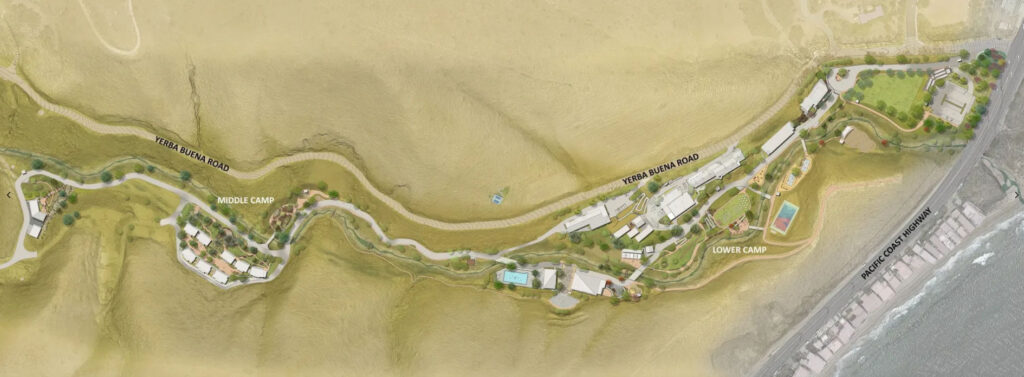 During the event, they posted a map of the future camp. I did