
🍎🍏🍯 L’Shanah Tovah – Happy New Year – 5787

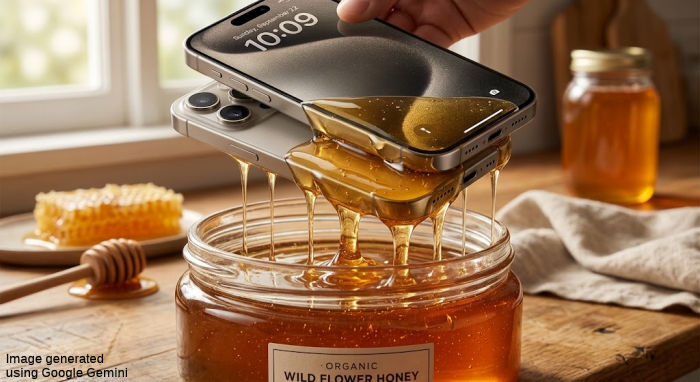
Apples and Honey 2026. Generated by the Google Gemini AI Generatoruserpic=tallitRosh Hashanah, the Jewish New Year, starts at sundown Friday, September 11th. Thus, it’s time for my annual New Years message for my family, my podcast listeners, my real-life BlogFacebook, Universeodon, Dreamwidth, Tumblr, Twitter/X, Threads, Bluesky and AARoads friends (including all the new ones I have made this year), and all other readers of my journal:*

L’Shana Tovah. Happy New Year 5787. May you be written and inscribed for a very happy, sweet, and healthy new year.

For those curious about Jewish customs at this time: There are a number of things you will see. The first is an abundance of sweet foods. Apples dipped in honey. Honey cakes. The sweet foods remind us of the sweet year to come. Apples in honey, specifically, express our hopes for a sweet and fruitful year. Apples were selected because in ancient times they became a symbol of the Jewish people in relationship to God. In Song of Songs, we read, “As the apple is rare and unique among the trees of the forest, so is my beloved [Israel] amongst the maidens [nations] of the world.” In medieval times, writes Patti Shosteck in A Lexicon of Jewish Cooking, apples were considered so special that individuals would use a sharp utensil or their nails to hand-carve their personal hopes and prayers into the apple skins before they were eaten. And the Zohar, a 13th-century Jewish mystical text, states that beauty – represented by God – “diffuses itself in the world as an apple.” With respect to the honey: honey – whether from dates, figs, or apiaries – was the most prevalent sweetener in the Jewish world and was the most available “sweet” for dipping purposes. And as for the biblical description of Israel as a land flowing with “milk and honey,” the Torah is alluding to a paste made from overripe dates, not honey from beehives. Still, enjoying honey at Rosh HaShanah reminds us of our historic connection with the Holy Land. Although the tradition is not in the Torah or Talmud, even as early as the 7th century, it was customary to wish someone, “Shana Tova Umetukah” (A Good and Sweet Year).
(Source: Reform Judaism Website)

Rosh Hashanah ImagesAnother traditional food is a round challah. Some say they it represents a crown that reflects our coronating God as the Ruler of the world. Others suggest that the circular shape points to the cyclical nature of the year. The Hebrew word for year is “shana,” which comes from the Hebrew word “repeat.” Perhaps the circle illustrates how the years just go round and round. But Rosh Hashana challahs are not really circles; they are spirals… The word “shana” has a double meaning as well. In addition to “repeat,” it also means “change”. As the year goes go round and round, repeating the same seasons and holidays as the year before, we are presented with a choice: Do we want this shana (year) to be a repetition, or do we want to make a change (shinui)? Hopefully, each year we make choices for change that are positive, and each year we will climb higher and higher, creating a spiritual spiral. The shape of the Rosh Hashana challah reminds us that this is the time of year to make those decisions. This is the time to engage in the creative spiritual process that lifts us out of the repetitive cycle, and directs our energies toward a higher end.
(Source: Aish Ha’Torah)

There are also apologies, for during the ten days starting Friday evening, Jews examine their lives and see how they can do better. On Yom Kippur (starting the evening of Sunday, September 20th), Jews apologize to G-d for their misdeeds during the past year. However, for an action against another person, one must apologize to that person.

So, in that spirit:

If I have offended any of you, in any way, shape, manner, or form, real or imagined, then I apologize and beg forgiveness. If I have done anything to hurt, demean, or otherwise injure you, I apologize and beg forgiveness. If I have done or said over the past year that has upset, or otherwise bothered you, I sincerely apologize, and will do my best to ensure it won’t happen again.

If you have done something in the above categories, don’t worry. I know it wasn’t intentional, and I would accept any apology you would make.

May all my blog readers and all my friends have a very happy, healthy, and meaningful new year. May you find in this year what you need to find in life.

————
[*: Image generated via the Google Gemini AI generator as I have no artistic ability. It took a while to generate as most of the free generators are crap. I tried to find one via image search, but there were no good updated images out there.]


Share

🏕 A Pre-History of Camp Hess Kramer

On Sunday, August 30, 2026, I was up at Camp Hess Kramer for a 75th Anniversary Tree Planting. This was the first time I had been on camp grounds since the 2018 Woolsey Fire; that fire destroyed 90% or more of Camp Hess Kramer and its sibling camp, Gindling Hilltop Camp. While walking around camp after the song session, I was talking to Aaron Wolf, Rabbi Wolf’s grandson, about a documentary he was working on regarding the camps and their rebirth. I suggested that he needed to include the pre-history of the camp; that is, what was on the land before Wilshire Blvd Temple purchased the property.

During the week since the planting, camp has been on my mind: both the future and the past.

The Future

The fire, and the subsequent rework of the camp facilities, will be erasing most of the traces of the past from the landscape. Almost all buildings that survived at CHK will be completely remodeled (both the Irmas Dining Hall, which dates to the late 1980s or 1990s, and the staff housing (now called “The Browns”), which dates to the late 1950s, have been taken down to studs. The new conference center and housing that replaced the old Sages building survived and appears to be one of the few survivors that isn’t being reworked. The concrete amphitheatre survived and isn’t changing.

Future Camp Hess Kramer MapDuring the event, they posted a map of the future camp. I did a Facebook post where I posted more pictures, including closer detail of the map. To summarize what is being done:

Camp is being rebuilt in three phases, for loads of reasons (including the fact that it took them 5 years to get the entitlements to rebuild with all the agencies involved, and the state funding for rebuilding were about to expire). Phase 1A is rebuilding lower CHK, pretty much up to the pool area. This allows them to reopen the camp for retreats and usages year round, but not for summer camp. They are also demolishing the old staff housing and infirmary (the infirmary is moving to the new Welcome Center, which will be schlep), and building a new “Gildred” hall that will have a new dining room, offices, and meeting spaces. Irmas, the old dining hall, will become another program space with staff housing below. [you can figure this all out if you wade through the planning blueprints linked below]. There will also be the aforementioned Welcome Center at the new entrance to camp, as well as a Fine Arts building with 3 “classrooms” (program spaces for arts). It looks like there will also be a teaching kitchen in the old “small games” area, and a climbing wall near the dance platform.

Phase 1B completes the rebuild of middle CHK and allows opening as a summer camp. It includes two cabin groups. One in the area where the girls cabins were, which are mostly two story cabins centered around plazas for interaction. There may be a second phase where the “boys” area is built out with cabins (I need to look at the plans to see if they are one or two story), as well as the platform tents. There will also be staff housing near Scouts Grove; unclear which cabin phase that is in.

Phase 2, which is much much farther in the future, will reopen Hilltop. From the planning documents, the layout of Hilltop is essentially the same, although the pavilion would be rectangular.

The Phase 1A camp should reopen in 2027. Phase 1B is a few years further off, and requires a LOT of funding*, and regrowth of the summer program which lost campers during the pandemic years. Phase 2 is even further off. Note that Phase 1B might have two subphases with different timelines for expansion of the cabin area.
————————
*: This is where I should put the funding plug: They are not at the point where they are looking for capital donations for Phase 1A yet. That will come. Right now, they need operational funding: To rebuild the full camp requires restoring the financial foundation of the camps, which is hard when you are renting a facility. This means that currently, they run a deficit, supported by Wilshire’s endowments. They need operational funding to support the current camp. See their giving page for more information.

The rework of the camp will drastically rethink the camp flow. The Tennis Courts next to PCH will become a parking structure to keep vehicles out of the heart of camp, with tennis courts on the top. The former caretakers house space will become a welcome center, next to a new Fine Arts center. There will be a new multipurpose building where Gildred Hall was. As I mentioned, the Browns will be a new “Gildred Dining Hall”. Baruh will be replaced by a pool building and a gymnasium (seemingly still called Baruh), separated by a plaza so that the amphitheatre looks into open space. In Phase 2, the cabin area will be centered around 2-story cabins mostly in the old girls cabin area, facing central plaza to build communities from groups of cabins. I found a page from the architects that shows pictures of the new conception. I also found the architects from an earlier iteration, which included a map of that earlier iteration. That earlier map is interesting, because although supposedly post-fire, it shows many of the buildings that were destroyed in the fire, including Baruh and the full cabin areas. But it also shows a drastic working of todays “The Browns”, as well as additional facilities across Yerba Buena Road.

Basically, the point here is that camp evolves. The camp from the era when I attended (1969-1979) is drastically different than the original camp from the 1950s and early 1960s. What camp became in the 1990s and 2000s was drastically different than my era. Camp in the “combined wandering camp” era is different than the in-Malibu era. Camps when Malibu reopens will be different, and will establish its own traditions. Camp changes.

Read More …

Share

🚘 Headlines About California Highways – August 2026

September. The tail end of summer and the start of fall. Leaves should be falling, but here in Southern California we’re facing the possibility of the tail end of a hurricane that is blowing up from Baja. Of course, that will be followed by more Santa Ana winds and fires. Will Big Sur stay open for the October roadmeet? I don’t know, and I don’t follow the prediction markets. But I do follow the headlines.
California Highways: Route by Route logoAs always, we start with the California Highways: Route by Route podcast: I’m still working on Season 5: I just finished writing the second Route 18 episode (5.07). I’ll be taking a break to do the next round of updates for the website, and then get back to writing. We’ll be starting to record Season 5 next week, so look for the first Season 5 episode in mid to late September. Zencaster is working well for recording the podcast, and I think we’ve solved the microphone problems. I also got some more editing tips visiting a high school friend who has worked in terrestrial and internet radio, which I’ll try when I edit Season 5. Please let us know if it sounds better.

As a reminder: You can help our listening audience grow. Please tell your friends about the podcast, “like”, “♥”, or “favorite” it, and give it a rating in your favorite podcatcher. Share the podcast on Facebook groups, and in your Bluesky and Mastodon communities. Leave a review, and tell us about it. For those that hear the early episodes, the sound quality of the episodes does get better — we were learning. As always, you can keep up with the show at the podcast’s forever home at https://www.caroutebyroute.org , the show’s page on Spotify for Creators, or you can subscribe through your favorite podcatching app or via the RSS feeds (CARxR, Spotify for Creators) . The following episodes have been posted this month:

  • August | CA RxR 4.15: Bonus: 25 Years of Gribblenation. Episode 4.15 is the second of two bonus episodes. The year 2026 marks 25 years since Adam Prince, Doug Kerr, and Brian LeBlanc started the website. This episode features a discussion with Daniel, Tom (a Gribblenation contributor), Adam, and Doug about the past, present, and future of Gribblenation. Learn the story of how the site came to be, how the name was chosen, the hiccups along the way, and where the site is today. More importantly, learn the philosophy behind Gribblenation: To not only tell the facts and the history of the roads, but to tell the stories behind the roads. Next update: Coming sometime in late September 2026 will be Season 5 of the podcast, starting with the story of Route 15 and I-15 between San Diego and Temecula. (Spotify for Creators)

As a reminder: One of the sources for the highway page updates (and the raison d’etre for for this post) are headlines about California Highways that I’ve seen over the last month. I collect them in this post, which serves as fodder for the updates to my California Highways site, and so there are also other pages and things I’ve seen that I wanted to remember for the site updates. Lastly, the post also includes some things that I think would be of peripheral interest to my highway-obsessed highway-interested readers.

Well, you should now be up to date. Here are the headlines that I found about California’s highways for August 2026:

Key

[Ħ Historical information |  Paywalls, $$ really obnoxious paywalls, and  other annoying restrictions, such as demanding your email in order to display the article. I’m no longer going to list the paper names, as I’m including them in the headlines now. Note: For paywalls, sometimes the only way is incognito mode, grabbing the text before the paywall shows, and pasting into an editor. Using archive.ph usually works for these sites. See this article for more tips on bypassing paywalls. $$ paywalls are even more annoying. Archive.ph doesn’t work, and you may not be able to get the full details. 🎥 indicates a primarily video article. 🎩 indicates hat/tip to someone for finding this article. ✔ indicates that the article was processed as part of the recent “Updates to California Highways” cycle. ]

Highway Headlines

  • Houston Is Proof: You Can’t Build Your Way Out of a Traffic Jam (Space Daily). Picture a road so wide that from the middle of it you cannot make out what shops are on the other side. Twenty-six lanes of concrete laid flat across west Houston, wide enough to land a jumbo jet on. Now picture it at five thirty on a Tuesday, packed solid, everyone breathing their own exhaust and quietly wondering what the three billion dollars bought. That is the Katy Freeway, and it is the most expensive economics lesson anyone has ever poured in concrete.
  • Port of LA studies Vincent Thomas Bridge fix for megaships (Port Technology International | 🎩 Plutonic Panda). The Port of Los Angeles, the California State Transportation Agency (CalSTA) and the California Department of Transportation (Caltrans) have signed a Memorandum of Understanding (MoU) to jointly evaluate long-term options for replacing or modifying the Vincent Thomas Bridge. The bridge is a critical link in the US supply chain. The agreement launches what the Port describes as a once-in-a-generation planning effort to assess concepts that would improve safety, sustainability and freight mobility while keeping the port competitive as global trade evolves. The MOU sets out a roadmap for the three parties to evaluate replacement or modification concepts through Caltrans’ project development process, with the initial phase focused on planning, technical evaluation and environmental review. Subject to approval by the Los Angeles Board of Harbor Commissioners, the port will contribute $5 million towards preliminary engineering, environmental studies and other technical work needed to assess potential alternatives.
  • Old Sac I-5 Dream Deck (FB/Inside Sacramento). After his death in 1912, Daniel Burnham, the legendary Chicago architect, was celebrated as much for his famous quote as for his high-profile planning projects. “Make no little plans,” Burnham said. “They have no magic to stir men’s blood, and probably will not themselves be realized.” When I think of what U.S. Rep. Doris Matsui recently pulled off for her local congressional district, the more Burnham’s quote resonates. “Make big plans,” he went on. “Aim high in hope and work, remembering that a noble, logical diagram, once recorded, will never die, but, long after we are gone, will be a living thing, asserting itself with ever-growing insistency.”
  • Here’s the latest on the $114M Highway 101 wildlife crossing (VC Star). Crews have drilled supports and started to pour concrete for the Agoura Road stretch of a wildlife crossing that will span Highway 101 near Liberty Canyon Road. Plans call for the Wallis Annenberg Wildlife Crossing to look like a slice of the Santa Monica Mountains. Billed as the world’s largest urban wildlife crossing, the 210-foot-long, vegetated bridge is expected to reconnect the Santa Monicas to other areas. Experts say it could help save an isolated mountain lion population from extinction.
  • California Transportation Plan Updates (Caltrans). The California Transportation Plan (CTP) provides a common framework that guides transportation decisions and investments by all levels of government and the private sector. Statutorily mandated federal and state law requires that Caltrans facilitate, develop, and prepare the CTP. It is Caltrans responsibility to work with stakeholders and the public to update the CTP every five years. The latest iteration of the draft CTP is now available for public comment on Caltrans Engagement Portal: …
  • California’s Highway 101 faces daytime closures this week amid construction of the world’s largest wildlife crossing (Secret Los Angeles). SoCal is in the middle of a wave of infrastructure projects, from major transit upgrades to public space improvements. While many are focused on easing congestion and making it safer for people to get around, some are also designed to protect the region’s wildlife. One of the most ambitious examples is the Wallis Annenberg Wildlife Crossing, a landmark project that will reconnect habitats divided by the 101 while helping reduce wildlife-vehicle collisions. This week, drivers traveling through Agoura Hills should plan ahead, as construction at the crossing will temporarily affect access to the freeway.
  • RCTC Breaks Ground On Ramona Expressway Improvement Project (Construction Equipment Guide | 🎩 Plutonic Panda). The Riverside County Transportation Commission (RCTC) broke ground on June 24, 2026, on a series of safety and road improvements along a major 8.6-mi. segment in Riverside County. Skanska USA Civil is the general contractor for the $107.4 million project. Major roadway improvements will be made along the Ramona Expressway from Warren Road to about 1 mi. east of Rider Street in the county. This segment is within the Mid County Parkway, also known as the MCP, a planned 16-mi. corridor between Route 79 in the Hemet Valley and Interstate 215 in Perris. Construction is set to take place through 2028.

Read More …

Share